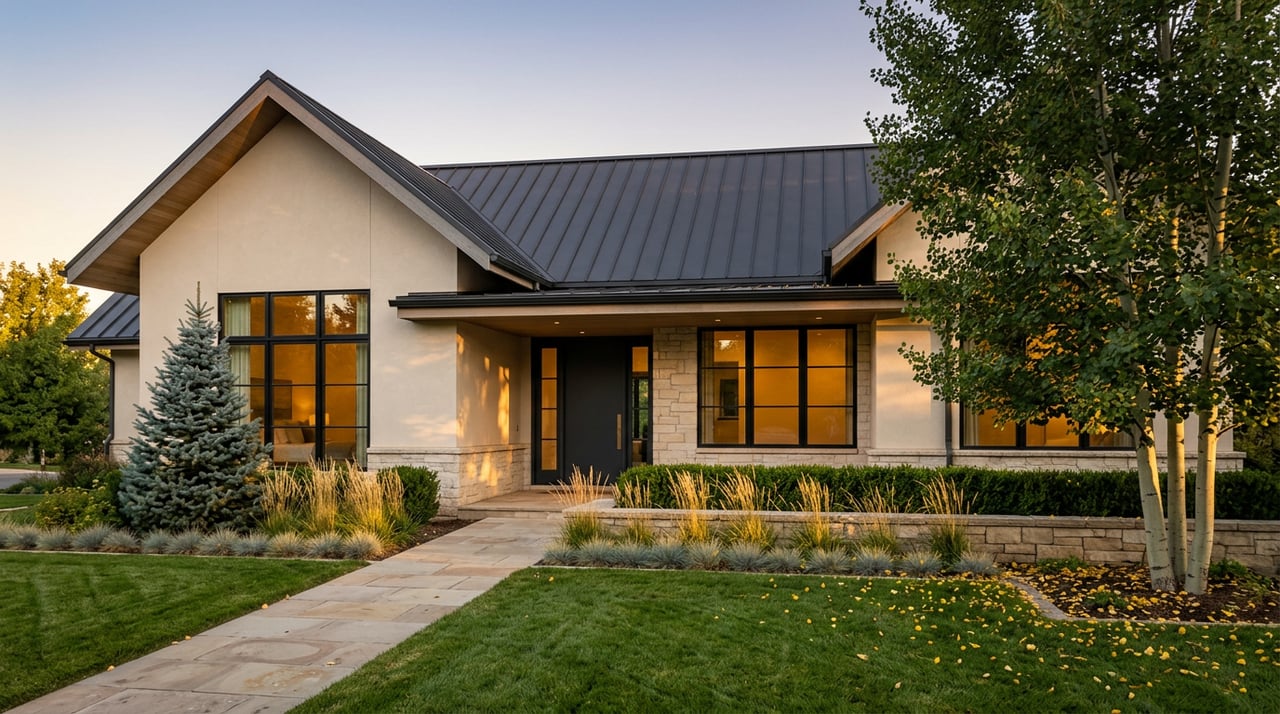
Not Every Sandy Address Is Sandy City Yet. The Line Is Still Moving.
Vir Singh September 10, 2026
Vir Singh September 10, 2026
There is a stretch of land near the mouth of Little Cottonwood Canyon where a Texas longhorn and a few teenage bison graze in fenced pastures, twenty minutes from a TRAX platform. A few blocks away, in a newer subdivision built on quarter-acre lots, no homeowner is legally allowed to keep a horse. The subdivision borders the Dimple Dell equestrian trails. The zoning simply will not allow it. Both places carry a Sandy mailing address. Only one of them is actually inside Sandy City.
That gap between what a listing says and what the parcel legally is has a name in Salt Lake County right now: an unincorporated island. And for a buyer weighing a home near Granite, Sandy Hills, or Willow Creek, it is not a footnote. It is a fact that is actively changing, on a deadline, in the middle of a live dispute between residents and the city.
Sandy City's boundary is not a clean ring. Scattered inside and along its edges are pockets of land that were never annexed, governed instead by Salt Lake County rather than the city. Some residents on streets that appear to sit in the middle of Sandy have spent decades outside its jurisdiction, subject to county code rather than Sandy Municipal Code, county fire and sheriff services rather than city police and fire, and a different property tax structure entirely.
In 2024, state lawmakers decided to stop treating that as a permanent arrangement. House Bill 330, sponsored by Rep. Jordan Teuscher of South Jordan, requires unincorporated islands within or adjacent to cities in Salt Lake County to either incorporate as their own municipality or be automatically annexed into the neighboring city by July 1, 2027. The law's stated goal was to eliminate the patchwork and give Salt Lake County wall-to-wall cities instead of scattered islands the county has to service piecemeal.
Around Sandy, that patchwork includes the communities of Granite, Sandy Hills, and Willow Creek, plus smaller unnamed pockets along the city's edges. Granite alone is made up of roughly sixteen separate islands clustered near Little Cottonwood Canyon, home to an estimated 1,000 to 1,500 residents depending on which count you use. Sandy Hills is smaller in land area but denser, with seven or eight islands and a population in the 3,000 to 4,000 range. Only communities with an existing community council, which in this case means Granite and Sandy Hills, are eligible to attempt incorporation as their own town. Every other island is on a path to annexation by default.
This is not a settled piece of history. As of this spring, Granite's Community Council, chaired by Vaughn Cox, was racing to get an incorporation question in front of voters. A feasibility study completed by EFG Consulting and released in mid-March 2026 concluded that a Town of Granite was both functionally and financially viable. Getting that question certified for the November 2026 ballot required locking in a final incorporation map before the state's filing deadlines.
Sandy City moved in the opposite direction at the same time. Over two council meetings in April 2026, the city voted unanimously to annex 21 to 22 individual parcels out of the Granite islands, with a vote on roughly eight more paused for a later date. Under state law, pulling even one parcel out of a proposed incorporation area forces the community to redraw its maps and resubmit its feasibility study, which can push a vote back an entire election cycle. Cox put it plainly at the time: if enough parcels are annexed before November, Granite loses its shot at a 2026 vote and gets pushed to November 2027, by which point the automatic annexation deadline has already come and gone.
Some of the friction traces back to water, not politics. A number of Granite property owners are bound by water agreements signed with the city years or decades ago, agreements that stipulated the property would annex into Sandy once annexation became feasible. One longtime resident and former Sandy homeowner described the dynamic to a reporter this way:
"You guys are a monopoly up in our area when it comes to water."
Whether Granite's incorporation question ultimately reached the November 2026 ballot, and how residents voted if it did, is exactly the kind of detail that shifts month to month. It is not something a buyer should assume from a listing description. It is something to verify for the specific parcel in question, as of the week you are writing an offer.
The stakes here are not symbolic. Sandy officials, including the city's Assistant Community Development Director and Community Development Director, have said publicly and repeatedly that most residents who annex into Sandy see their property tax bill go down rather than up, since city rates have historically run below the combined county and special-district rates unincorporated residents pay. That claim has held up in past annexation rounds going back at least to 2015, when the city built a side-by-side tax comparison tool specifically so residents could check the math on their own parcel before voting.
Water access can change with the boundary too, sometimes with no vote required at all, if a legacy water agreement already commits the property to annex once the city decides the timing is right.
Zoning is where the more permanent changes show up. The Granite development bordering the Dimple Dell equestrian trail is the clearest example: the city approved quarter-acre residential lots there in exchange for water access, and quarter-acre lots do not meet the acreage threshold for keeping horses, even on land that touches a designated equestrian trail. Residents describe it as one of the more visible ironies of how annexation reshapes what a piece of land is actually allowed to be used for.
And then there is the everyday texture of living somewhere unincorporated. Some Sandy Hills residents have resisted requests for streetlights on their roads specifically because they worry it will invite more traffic and higher speeds. Other county-island residents further north have talked about summer gatherings and legal fireworks on streets where their incorporated neighbors, just across an invisible line, cannot do the same. None of that shows up on a listing sheet, and all of it can change the moment a parcel crosses into city limits.
If you are comparing a home near Granite, Sandy Hills, Willow Creek, or the edges of Sandy against homes elsewhere in the valley, the city's headline numbers assume the parcel is actually inside the city. Sandy's median home sale price hit $699,619 in mid-2026, up 6.8 percent from the year before, with homes typically going under contract in about 25 days. That figure describes incorporated Sandy. It says nothing about a parcel's incorporation status, its water agreement, or which side of a 2027 deadline it currently sits on.
Before writing an offer on a home in one of these areas, it is worth checking a few things directly rather than assuming the mailing address settles the question:
Will my property taxes definitely go down if my home gets annexed into Sandy? City officials have said most residents see a decrease, based on comparisons run in past annexation rounds. That has not been true for every single parcel in every scenario, so it is worth asking for a parcel-specific comparison rather than assuming the citywide pattern applies to your address.
If I buy in an unincorporated island now, will I get a vote on annexation later? It depends on the island and the timeline. Some parcels are tied to legacy water agreements that trigger annexation regardless of a resident vote. Others fall under the July 1, 2027 automatic annexation deadline if the surrounding community does not successfully incorporate first. Ask specifically which category your parcel falls into.
Does buying in one of these islands affect what I can build or keep on the land? It can. Zoning differs between Salt Lake County and Sandy City, and a change in jurisdiction can change lot-size rules, setback requirements, or allowances like keeping horses. Confirm both the current zoning and what Sandy's code would apply if the parcel is annexed.
None of this is a reason to avoid these neighborhoods. Granite's canyon-mouth setting and Sandy Hills' quieter, larger lots are part of what makes this corner of the valley appealing in the first place. It is a reason to ask sharper questions before you sign anything, because the ground under these specific addresses is still legally in motion.
If you are looking at a home near Granite, Sandy Hills, or anywhere along Sandy's unincorporated edges and want a second set of eyes on what you are actually buying into, Kingswell Estates can help you check the parcel, the water agreement, and the timeline before you write the offer. Let's Connect.
Stay up to date on the latest real estate trends.




Get assistance in determining current property value, crafting a competitive offer, writing and negotiating a contract, and much more. Contact Vir today to discuss all your real estate needs!